
Favorite Tools And Supplies For Concrete Curb Projects
Get insights into the most popular and reliable products used by contractors to achieve perfect concrete curb results.
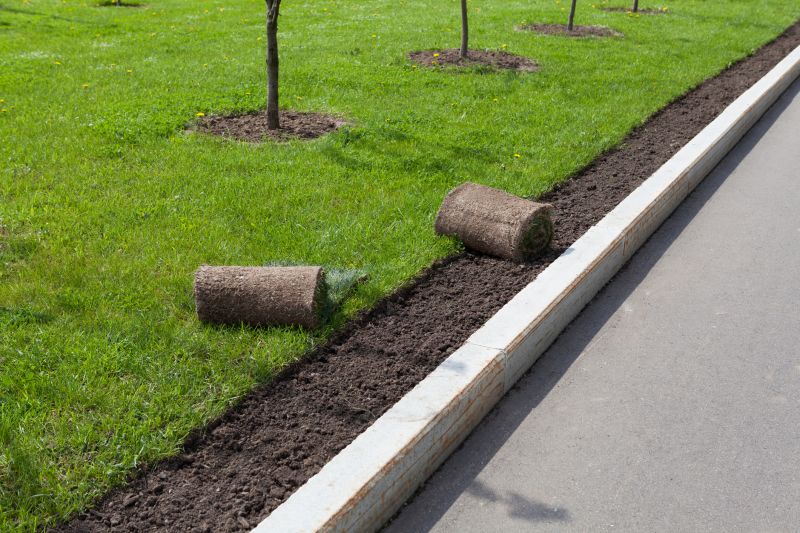 Concrete curb installations are essential elements in many outdoor projects, providing defined boundaries and enhancing the overall appearance of landscapes, driveways, and walkways. Selecting the right products for curb installation involves understanding various tools and materials designed to facilitate accurate, durable, and efficient construction. From forms and molds to reinforcement materials, there is a wide range of options tailored to different project sizes and complexities.
Top Overall Option
Concrete Curb Form System
A versatile concrete curb form system offers adjustable, reusable molds that facilitate creating straight or curved curbs with consistent dimensions. Designed for ease of setup and removal, these systems help achieve professional-looking edges and are suitable for various project sizes. They often feature durable materials like high-impact plastic or metal, ensuring longevity and repeated use. This product type is favored for its flexibility and ability to produce precise, clean lines in concrete curb installations.
Types of Products For Concrete Curb Installations
Flexible Concrete Curb Forms
Allow for creating curved and irregular curb shapes with adjustable molds that conform to desired contours.
Rigid Concrete Curb Forms
Provide stable, straight edges for precise linear curbs, often made from metal or sturdy plastic.
Reusable Plastic Molds
Lightweight, durable molds designed for repeated use, ideal for consistent curb shapes.
Metal Curb Forms
Heavy-duty metal forms that offer durability and precise edge definition for larger or commercial projects.
Reinforcement Mesh and Rebar
Used to strengthen concrete and prevent cracking, often installed within the curb form before pouring.
Joint Fillers and Sealants
Materials used to fill expansion joints and seal edges for a finished appearance and durability.
Concrete Edging Tools
Hand tools for finishing and shaping the top edges of the curb for a smooth, professional look.
Leveling and Compacting Equipment
Tools such as vibrators and tampers to ensure proper compaction and surface finish of the poured concrete.
Form Release Agents
Products applied to molds to facilitate easy removal and prevent sticking.
Concrete Mixers
Equipment for mixing concrete to achieve a consistent, workable consistency suitable for curb installation.
Curb Cutting and Shaping Tools
Power tools like saws and grinders used for shaping or adjusting existing curbs.
String Lines and Guides
Tools used to mark and align curb edges for straight, uniform installation.
Concrete Color Additives
Pigments that can be mixed into the concrete for aesthetic color effects.
Curb Edge Trimmers
Specialized tools for trimming and refining curb edges after concrete has set.
Form Anchors and Stakes
Support accessories to secure forms in place during pouring and setting.
Popular Choices
A highly adaptable system for shaping both straight and curved curbs, appreciated for its reusability and ease of use.
Flexible molds that accommodate custom curves and irregular shapes, often favored for landscaping projects.
Commonly used to add strength to curb concrete, helping to reduce cracking and improve longevity.
Popular for their durability and precision, especially in commercial or large-scale installations.
Tools used for smoothing and detailing curb edges to achieve a clean, finished appearance.
Sealants used to fill expansion joints, preventing water ingress and cracking.
Equipment to ensure proper compaction of poured concrete within forms, reducing voids.
Essential for aligning curb edges accurately during installation.
Pigments added to concrete mixes for decorative color effects.
Help in easy removal of forms after concrete curing, maintaining clean edges.
Power tools used for cutting or shaping existing curbs for modifications or repairs.
Tools like screeds and straightedges used to achieve a flat, even surface.
Support accessories to secure forms firmly in place during pouring.
Proper installation requires precision, which can be achieved through specialized tools such as curb forms, which help shape and support the concrete until it sets. These forms come in multiple configurations, including flexible molds for custom curves and rigid forms for straight edges. Reinforcement materials like mesh and rebar are often incorporated to improve durability and prevent cracking over time. Additionally, accessories like joint fillers, sealants, and finishing tools contribute to a professional-looking and long-lasting curb.
When planning a curb installation, it is important to consider the compatibility of products with the specific concrete mix being used, as well as the environmental conditions of the installation site. Durability, ease of use, and the ability to achieve clean, sharp edges are key factors to keep in mind. Investing in quality products can help ensure that the project progresses smoothly and results in a finished product that meets aesthetic and functional expectations.
Overall, the selection of appropriate products for concrete curb installations is crucial for achieving precise, durable, and visually appealing results. Whether undertaking a small residential project or a larger commercial endeavor, understanding the variety of tools and materials available can make the process more manageable and efficient. Proper planning and the right product choices contribute significantly to the success of any concrete curb installation.
Key Buying Considerations
- Compatibility with the size and shape of your curb project.
- Material durability and resistance to weathering or impact.
- Ease of setup and removal, especially for reusable forms.
- Flexibility for creating curved versus straight curbs.
- Compatibility with your chosen concrete mix and additives.
- Availability of replacement parts or accessories.
- Ease of cleaning and maintenance for reusable products.
- Level of precision offered for straight and curved edges.
- Weight and portability of the forms and tools.
- Cost-effectiveness and potential for multiple uses.
- Support for shaping complex or custom curb designs.
- Inclusion of features like adjustable height or width.
- Compatibility with reinforcement materials like mesh or rebar.
- Availability of accessories like joint fillers or sealants.
- User reviews and recommendations for ease of use and results.